

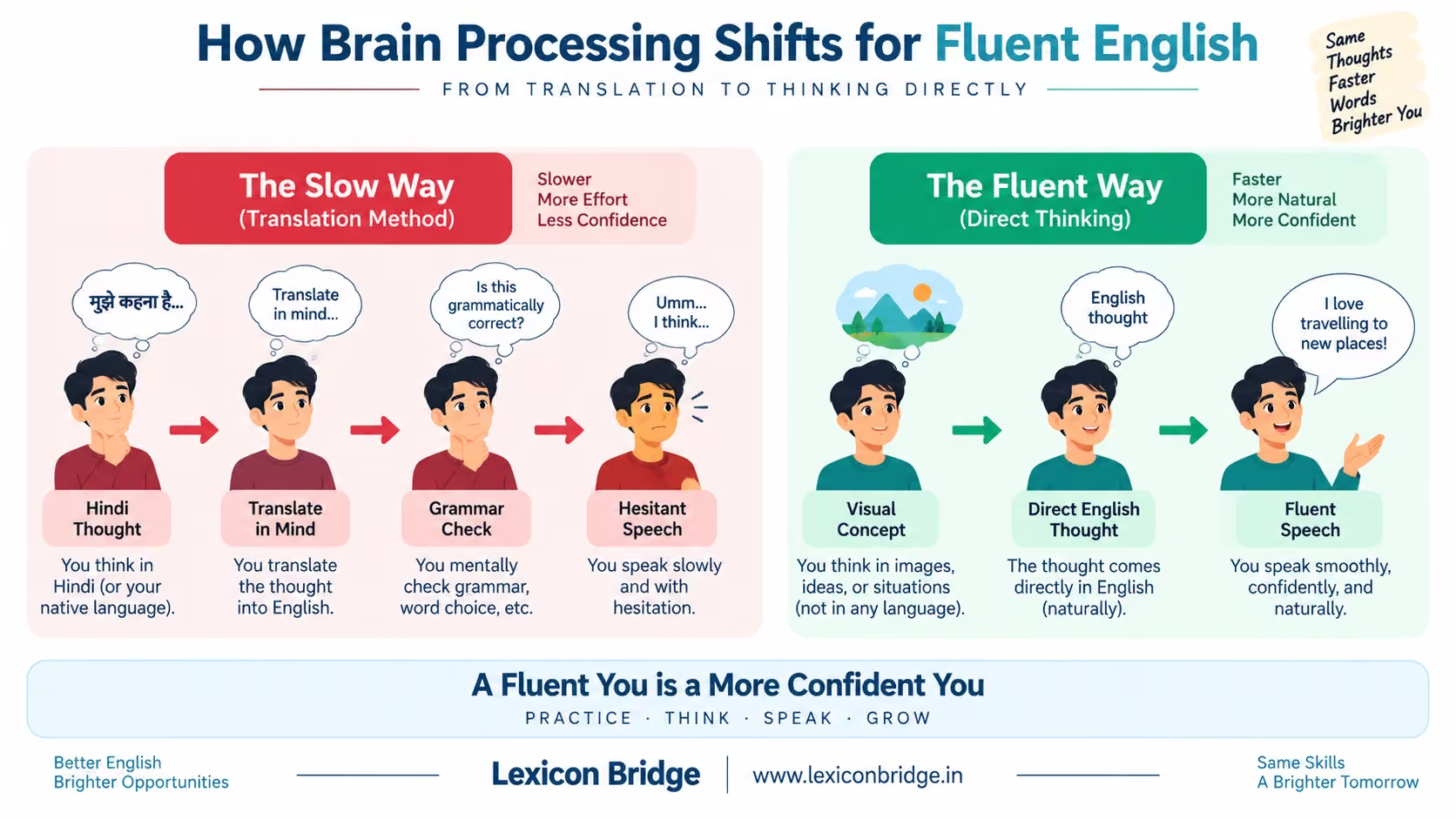
Many Indian learners struggle to achieve natural fluency because they process thoughts in their mother tongue first. Learning how to stop translating Hindi to English while speaking is the single most important step toward overcoming mid-sentence hesitation and building natural speech rhythm.
When you mentally translate every sentence, your brain undergoes a double-processing delay. According to cognitive linguistics research published on ScienceDirect, direct language mapping bypasses native-language syntax filters, reducing mental fatigue and conversational delays by over 60%.
Table of Contents
- Why You Need to Stop Translating Hindi to English for Fluency
- 7 Practical Steps to Stop Translating Hindi to English While Speaking
- 1. Label Your Physical Environment Directly in English
- 2. Practice 5-Minute Daily Self-Talk (Inner Monologue)
- 3. Stop Reading Dual-Language Dictionaries
- 4. Learn Phrases and Chunks, Not Isolated Words
- 5. Accept Grammatical Imperfection in Early Stages
- 6. Use the “Shadowing Technique” with Audio Clips
- 7. Consume English Content Without Native Subtitles
- Daily Routine Checklist to Train Direct English Thinking
- Transform Your English Communication with Lexicon Bridge
Quick Key Takeaways
- Root Cause: Mental translation creates a double-processing lag that triggers pauses and filler words.
- Direct Mapping: Connect objects and actions directly to English concepts without native vocabulary intermediates.
- Daily Habit: Start with simple 5-minute self-talk exercises to retrain your subconscious inner monologue.
Why You Need to Stop Translating Hindi to English for Fluency
The habit of translating sentence-by-sentence creates two major obstacles during real-time conversations:
- Grammatical Misalignment: Hindi follows a Subject-Object-Verb (SOV) structure, whereas English follows Subject-Verb-Object (SVO). Literal translation forces your brain to constantly rearrange word order mid-speech.
- Speech Hesitation: Spending time searching for exact vocabulary equivalents leads to excessive filler sounds like “um,” “ah,” and “basically.”
When you train your brain to stop translating Hindi to English during routine conversations, you unlock instant recall and smooth sentence transitions.
7 Practical Steps to Stop Translating Hindi to English While Speaking
Reprogramming your thought patterns requires consistent, micro-daily habits rather than passive grammar study. Implement these seven actionable techniques to accelerate your progress:
1. Label Your Physical Environment Directly in English
Instead of looking at a table, thinking of the Hindi word “मेज”, and then retrieving “table,” train yourself to connect the object directly with its English label.
2. Practice 5-Minute Daily Self-Talk (Inner Monologue)
Spend five minutes each morning narrating your routine silently or out loud in simple English sentences. Describe what you are making for breakfast or what tasks you plan to complete.
This simple habit conditions your subconscious to stop translating Hindi to English for everyday thoughts.
3. Stop Reading Dual-Language Dictionaries
When learning new vocabulary, transition from Hindi-to-English dictionaries to English-to-English learner dictionaries. Understanding words through simple English definitions strengthens direct contextual associations.
4. Learn Phrases and Chunks, Not Isolated Words
Memorizing standalone vocabulary forces you to build sentences piece-by-piece. Instead, learn functional word clusters like “Would you mind…”, “As far as I know…”, or “I am looking forward to…”
5. Accept Grammatical Imperfection in Early Stages
Over-analyzing grammar rules while speaking locks your brain into translation mode. Prioritize smooth expression and basic clarity first; grammatical accuracy improves naturally over time through continuous exposure.
Permitting yourself to speak without perfection makes it much easier to stop translating Hindi to English during live interactions.
6. Use the “Shadowing Technique” with Audio Clips
Listen to short 30-second clips of English podcasts or news broadcasts and repeat the sentences immediately after the speaker. Imitating native speech speed train your vocal muscles and brain to respond without internal translation pauses.
7. Consume English Content Without Native Subtitles
Watching movies or video interviews with English subtitles (or no subtitles at all) forces your brain to process auditory cues directly in the target language.
Daily Routine Checklist to Train Direct English Thinking
Use this simple daily checklist to keep your practice on track:
- Morning (5 mins): Narrate your daily schedule in English during your morning routine.
- Afternoon (10 mins): Listen to an English podcast or news snippet using the shadowing technique.
- Evening (5 mins): Reflect on your day out loud, focusing on continuous flow rather than perfect grammar.
Following this structured routine makes it natural to stop translating Hindi to English within a few weeks of consistent practice.
Transform Your English Communication with Lexicon Bridge
Breaking deep-rooted translation habits requires structured guidance and consistent real-world practice. At Lexicon Bridge, our certified trainers provide personalized 1-on-1 coaching, real-time feedback, and interactive speaking sessions to help you think and communicate in English effortlessly.
Whether you want to stop translating Hindi to English for upcoming job interviews, corporate presentations, or daily confidence, our customized programs deliver measurable results.
Ready to Speak English Fluently Without Hesitation?
Book a live 1-on-1 fluency assessment and personalized coaching demo with our expert trainers today.
