

Starting your test with confidence can set the tone for your entire Band score. Knowing how to execute a strong IELTS Speaking introduce yourself response in Part 1 helps you manage nervousness and show fluency from your very first sentence.
Many test-takers worry about making simple grammatical errors during the initial ID check and warm-up questions. This guide breaks down the official format, ideal Band 8+ templates, common mistakes to avoid, and sample answers for both students and working professionals.
Table of Contents
Quick Key Takeaways
- Part 1 Purpose: The introduction is an identity check and warm-up, not a long speech.
- Ideal Response Length: Keep answers concise (1–3 sentences per question).
- Core Focus: Natural tone, accurate tense usage, and smooth pronunciation over complex vocabulary.
What Happens During the IELTS Speaking Part 1 Introduction?
Before the formal questions begin, the examiner must complete standard administrative checks. Understanding this sequence—based on official guidelines from the official IELTS website—helps you prepare your responses without overcomplicating them.
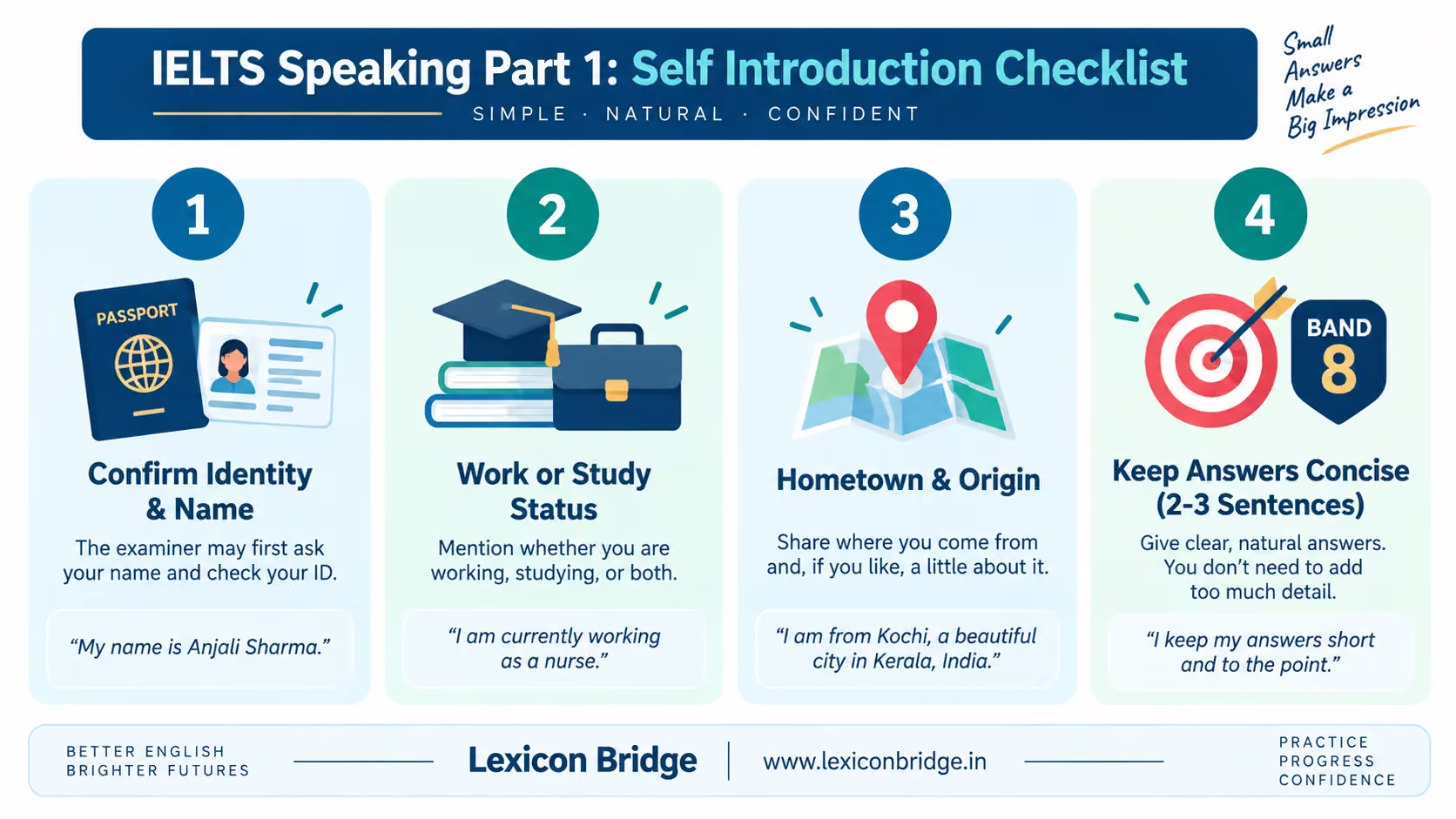
During the official setup, the examiner will perform four specific checks:
- Greeting: The examiner states their name and asks for yours.
- Name Check: You state your full name and what you prefer to be called.
- Identity Verification: You present your passport or national ID card.
- Location Check: The examiner asks where you are from.
Preparing a smooth IELTS Speaking introduce yourself opening prevents unnecessary pauses during these initial seconds.
How to Excel in Your IELTS Speaking Introduce Yourself Moment
The key to scoring Band 7 or higher in Part 1 is delivering direct, natural responses without sounding like you are reading a memorized script. Examiners are trained to spot memorized answers immediately.
Follow these four simple rules to keep your introduction natural and clear:
- Keep it direct: State your full name clearly without adding long, unnecessary details.
- Answer naturally: Use standard conversational English rather than forcing overly formal or artificial idioms.
- Focus on clarity: Speak at a steady pace so the examiner can verify your details quickly.
- Maintain eye contact: Sit comfortably and engage politely with the examiner.
High-Scoring IELTS Speaking Introduction Sample Answers
Here are tested sample responses categorized by candidate profile. Use these templates to structure your own practice sessions.
Sample 1: For Working Professionals
Sample Script: Working Professional
Examiner: Good morning. My name is Sarah. Can you tell me your full name, please?
Candidate: “Good morning, Sarah. My name is Rajesh Kumar, but you can simply call me Rajesh.”Examiner: Can I see your identification, please?
Candidate: “Of course. Here is my passport.”Examiner: Do you work or are you a student?
Candidate: “Currently, I work as a software engineer at a technology firm in Bengaluru. I have been in this role for about three years, primarily developing mobile applications.”
Sample 2: For Students or Recent Graduates
If you are currently studying or recently finished your degree, frame your IELTS Speaking introduce yourself answer around your major and future academic goals.
Sample Script: Student / Recent Graduate
Examiner: Tell me about what you are currently studying.
Candidate: “I recently completed my Bachelor’s degree in Biotechnology from Delhi University. Right now, I am preparing for my postgraduate studies abroad, specifically focusing on molecular research.”
Common Mistakes to Avoid in IELTS Speaking Part 1
Avoiding simple errors during the warm-up section keeps your confidence high for Parts 2 and 3. Pay attention to these common traps:
- Giving Oversimplified One-Word Answers: Saying just “Yes” or “No” forces the examiner to prompt you repeatedly. Always extend your answer by one sentence.
- Over-explaining Your Name: Avoid spending two minutes explaining the origin or meaning of your name unless explicitly asked.
- Reciting Memorized Speeches: Delivering a pre-scripted 2-minute speech during the ID check breaks the natural flow of conversation.
Practicing your IELTS Speaking introduce yourself techniques out loud ensures you strike the right balance between brevity and natural communication.
Boost Your IELTS Speaking Score with Lexicon Bridge
Targeting Band 7 or higher requires real-time feedback on pronunciation, vocabulary fluency, and grammar coherence. At Lexicon Bridge, our certified language trainers offer personalized mock tests and targeted coaching designed to help you succeed.
Whether you need help with your IELTS Speaking introduce yourself delivery or complex Part 3 discussion strategies, we provide structured online training tailored to your target score.
Ready to Achieve Your Target IELTS Band Score?
Book a live 1-on-1 speaking evaluation and mock session with our expert IELTS trainers today.
