

Making subtle grammar or vocabulary errors during a hiring round can cost you your dream position. Learning how to correct frequent English mistakes in job interview settings is essential for presenting yourself as a polished, competent professional.
Many candidates focus so heavily on technical preparation that they overlook conversational nuances. According to communication guidelines published by the Cambridge Assessment English team, clear expression and accurate syntax directly influence an evaluator’s perception of leadership ability.
Table of Contents
- Why Overcoming English Mistakes in Job Interview Rounds Matters
- The 10 Most Common Mistakes and How to Fix Them
- 1. Saying “Myself [Name]” During Introductions
- 2. Overusing “I Am Having” for Current Experience
- 3. Referring to Yourself as a “Pass Out” Candidate
- 4. Saying “I Did a Mistake”
- 5. Using “According to Me” for Professional Opinions
- 6. Incorrect Subject-Verb Agreement with “Every” or “Each”
- 7. Confusing “Revert” with “Reply”
- 8. Excessive Filler Words (“Basically”, “Actually”, “Like”)
- 9. Mixing Up “Discuss About”
- 10. Failing to Use Action Verbs for Past Achievements
- Practical Tips to Eliminate English Mistakes in Job Interview Performance
- Master Interview Fluency with Lexicon Bridge
Quick Key Takeaways
- Self-Introductions: Avoid starting introductions with phrases like “Myself [Name]”.
- Verb Tenses: Use simple present tenses for current skills instead of continuous present.
- Vocabulary Selection: Replace outdated regional idioms with standard global workplace phrases.
Why Overcoming English Mistakes in Job Interview Rounds Matters
Interviewers assess both what you say and how you say it. Subtle errors in subject-verb agreement or sentence structure are common English mistakes in job interview settings that can cause miscommunication during high-pressure questions.
Fixing these frequent slip-ups helps you build credibility, express complex ideas smoothly, and maintain natural rapport with the hiring panel.
The 10 Most Common Mistakes and How to Fix Them
Below are ten frequent syntax and phrase errors candidates make during hiring assessments, along with exact corrections you can apply immediately.
1. Saying “Myself [Name]” During Introductions
One of the most frequent English mistakes in job interview introductions involves incorrect self-identification. Starting an introduction with reflexive pronouns like “Myself Rahul” is grammatically incorrect in standard spoken English.
- Incorrect: “Myself Priya, I applied for the manager role.”
- Correction: “My name is Priya,” or “I am Priya.”
2. Overusing “I Am Having” for Current Experience
Using the present continuous tense when describing total work experience is a widespread structural error.
- Incorrect: “I am having four years of experience in marketing.”
- Correction: “I have four years of experience in marketing.”
3. Referring to Yourself as a “Pass Out” Candidate
The term “pass out” means fainting in standard English. Use correct academic status terms instead.
- Incorrect: “I am a 2024 pass out graduate.”
- Correction: “I graduated in 2024,” or “I am a 2024 graduate.”
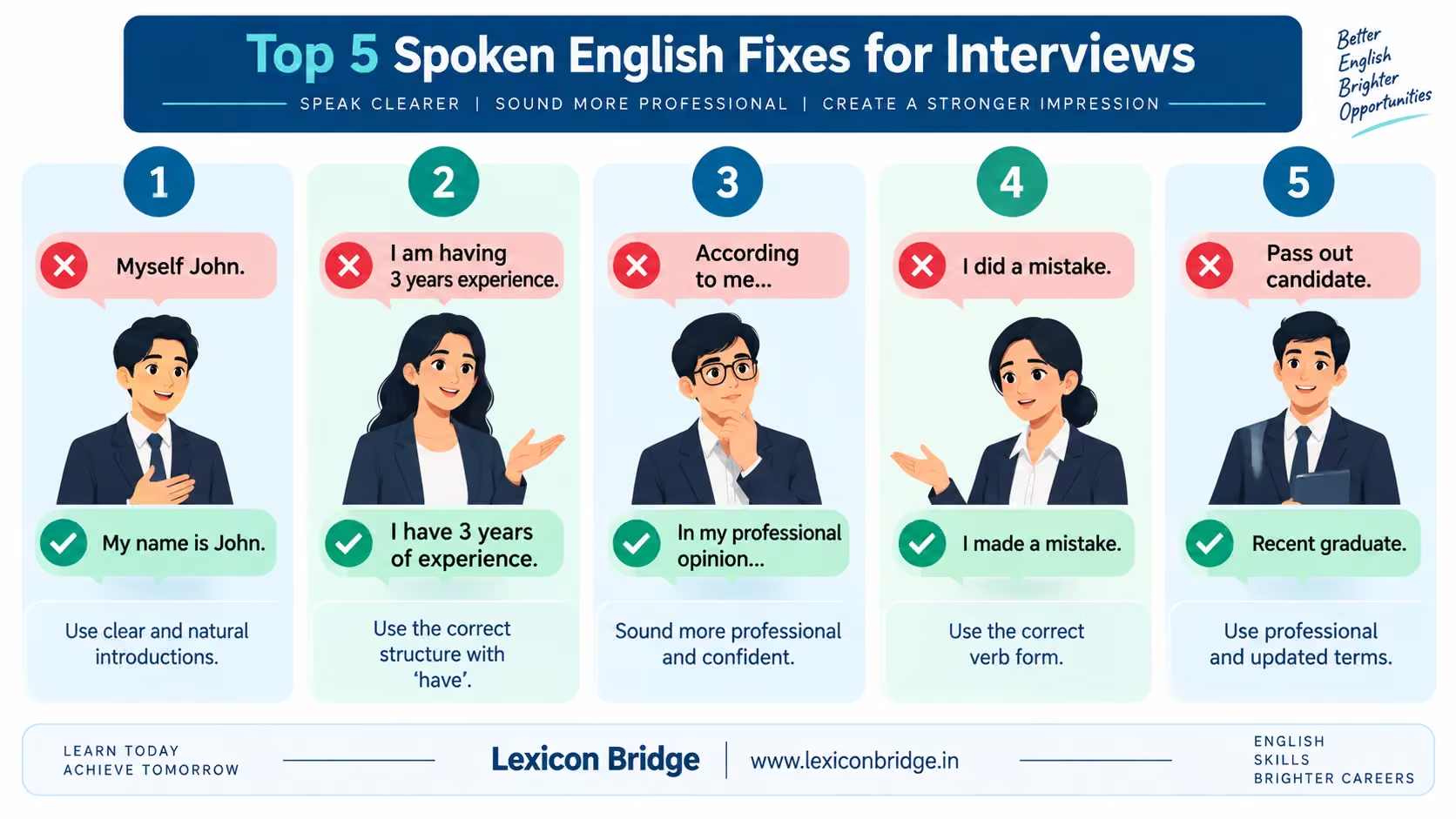
4. Saying “I Did a Mistake”
In English collocations, you make a mistake rather than do a mistake.
- Incorrect: “In my previous project, I did a mistake in data analysis.”
- Correction: “In my previous project, I made a mistake in data analysis.”
5. Using “According to Me” for Professional Opinions
“According to me” sounds unnatural in professional discussions. Use formal perspective markers instead.
- Incorrect: “According to me, team culture is crucial.”
- Correction: “In my opinion,” or “From my perspective, team culture is crucial.”
6. Incorrect Subject-Verb Agreement with “Every” or “Each”
Grammatical agreement issues are another category of widespread English mistakes in job interview conversations. Words like “everyone,” “everybody,” and “each” take singular verbs, not plural ones.
- Incorrect: “Everyone in my previous team were helpful.”
- Correction: “Everyone in my previous team was helpful.”
7. Confusing “Revert” with “Reply”
To “revert” means to return to a previous state, not to reply to a communication.
- Incorrect: “I will revert to your email by evening.”
- Correction: “I will reply to your email by evening,” or “I will respond by evening.”
8. Excessive Filler Words (“Basically”, “Actually”, “Like”)
Overusing conversational fillers signals nervousness and weakens your key arguments during interviews.
- Fix: Pause deliberately for one second before answering instead of filling silence with “basically” or “um.”
9. Mixing Up “Discuss About”
The verb “discuss” already includes the meaning of “about.” Adding “about” creates redundant phrasing.
- Incorrect: “I would like to discuss about my achievements.”
- Correction: “I would like to discuss my achievements.”
10. Failing to Use Action Verbs for Past Achievements
Describing past roles passively makes your background sound weak. Use dynamic action verbs to highlight accomplishments.
- Incorrect: “My work was handling customer queries.”
- Correction: “I resolved over 50 customer inquiries daily while maintaining high satisfaction scores.”
Practical Tips to Eliminate English Mistakes in Job Interview Performance
Fixing persistent English mistakes in job interview responses requires conscious, active practice before your scheduled interview date:
- Record Mock Responses: Answer common questions while recording your audio to identify personal filler words.
- Focus on Speed Control: Speaking slightly slower gives your brain extra time to construct accurate sentence structures.
- Practice Sentence Starters: Memorize 4–5 strong sentence openings for behavioral questions to avoid hesitation.
Targeted preparation eliminates recurring English mistakes in job interview rounds and boosts your confidence under pressure.
Master Interview Fluency with Lexicon Bridge
Overcoming hesitation and refining your professional vocabulary requires personalized feedback. At Lexicon Bridge, our language experts provide 1-on-1 interview coaching, accent stabilization, and real-time mock interviews tailored to your target industry.
Whether you want to fix persistent English mistakes in job interview discussions or build overall speaking confidence, our tailored training programs help you perform at your best.
Ready to Clear Your Next Interview with Confidence?
Book a personalized 1-on-1 mock interview and spoken English evaluation session today.
