

Navigating workplace discussions requires balancing assertiveness with tact. Knowing how to disagree politely in a meeting enables you to share critical insights, prevent project oversights, and maintain strong relationships with colleagues and stakeholders.
Expressing a opposing viewpoint during high-stakes discussions can feel uncomfortable. According to workplace communication frameworks published by the Harvard Business Review, psychological safety and open dialogue directly increase innovation and team problem-solving performance.
Table of Contents
- Why Learning to Disagree Politely in a Meeting Matters
- The 4-Step Formula for Professional Disagreement
- 7 Brilliant Phrases to Disagree Politely in a Meeting
- 1. “I See Your Point, But Have We Considered…”
- 2. “I Agree With Part of Your Idea, However…”
- 3. “From Another Angle, The Data Suggests…”
- 4. “That Is a Valid Approach, But Another Option Could Be…”
- 5. “I Understand The Intent, But I Am Concerned About…”
- 6. “May I Offer an Alternative Perspective on This?”
- 7. “I Have a Slightly Different View on How to Achieve That.”
- Real-World Sample Scripts for Corporate Meetings
- Common Mistakes to Avoid When Expressing Disagreement
- Elevate Your Corporate Communication with Lexicon Bridge
Quick Key Takeaways
- Acknowledge First: Always validate your colleague’s perspective before presenting an alternative view.
- Focus on Data: Address the idea or process rather than making personal judgments.
- Use Soft Transitions: Replace harsh words like “wrong” with diplomatic phrases like “from another angle.”
Why Learning to Disagree Politely in a Meeting Matters
Remaining silent during critical discussions to avoid tension can lead to flawed project execution. Mastering the ability to disagree politely in a meeting protects team dynamics while raising valuable perspectives.
When you express professional disagreement tactfully, you achieve three key outcomes:
- Build Professional Respect: Demonstrating constructive feedback marks you as a thoughtful contributor.
- Prevent Costly Errors: Raising alternative viewpoints highlights potential operational risks early.
- Maintain Team Harmony: Using respectful language ensures discussions remain collaborative rather than defensive.
The 4-Step Formula for Professional Disagreement
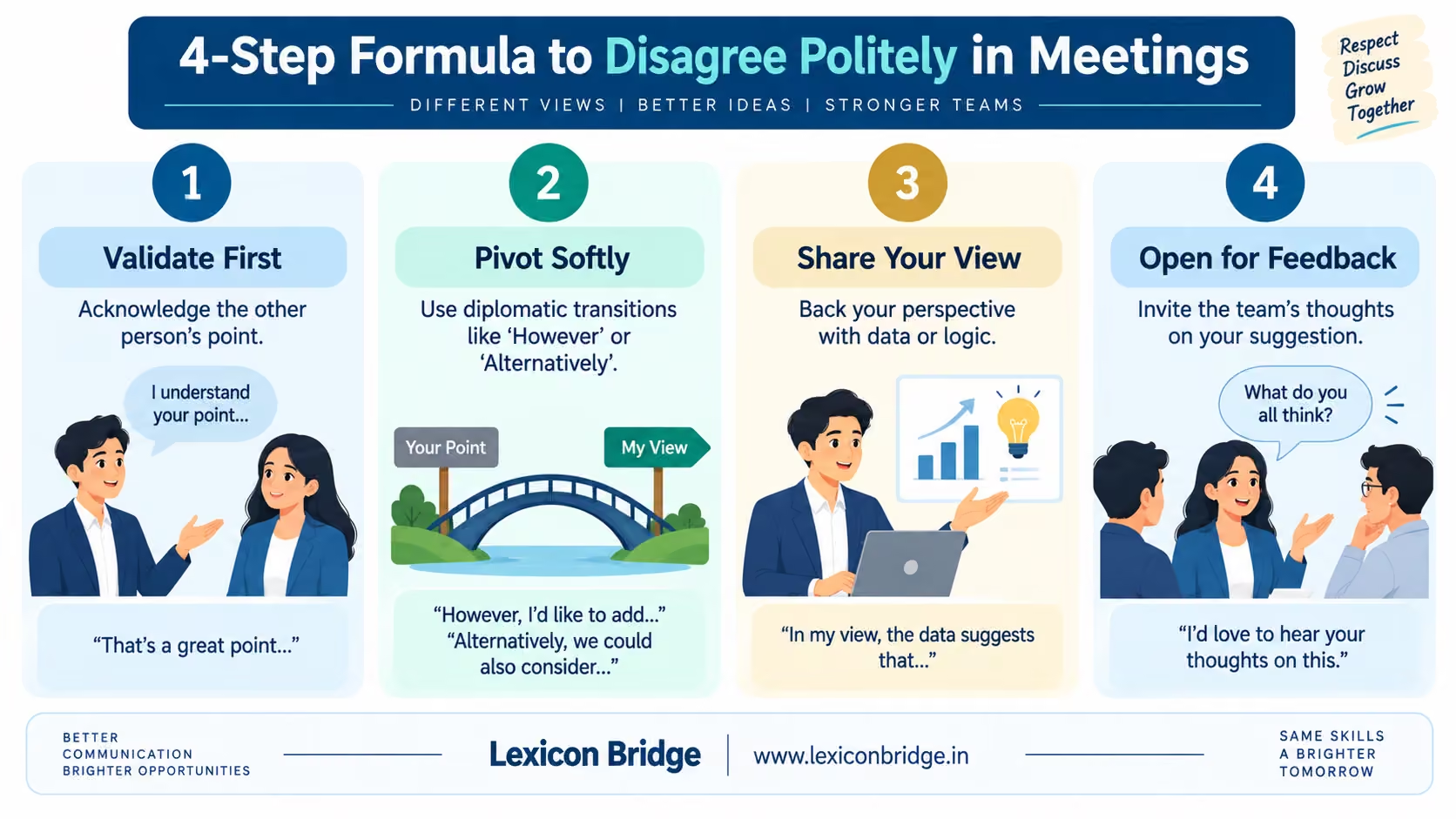
To challenge an idea without offending others, follow this battle-tested 4-step framework:
- Validate the Original Point: Show that you actively listened to your colleague’s proposal.
- Pivot Diplomatically: Use smooth transitions to signal a shift in perspective.
- Provide Data or Logic: Support your view with clear evidence or strategic reasoning.
- Invite Team Feedback: Conclude by opening the floor for collaborative discussion.
7 Brilliant Phrases to Disagree Politely in a Meeting
Integrate these professional scripts into your daily business discussions to communicate clearly and tactfully.
1. “I See Your Point, But Have We Considered…”
This phrase acknowledges your teammate’s effort while guiding attention toward an unexamined factor.
2. “I Agree With Part of Your Idea, However…”
Finding common ground first reduces defensiveness before you introduce an alternative solution.
3. “From Another Angle, The Data Suggests…”
Framing your response around objective metrics makes it easier to disagree politely in a meeting without making it personal.
4. “That Is a Valid Approach, But Another Option Could Be…”
Offering options keeps the conversation solution-focused rather than argumentative.
5. “I Understand The Intent, But I Am Concerned About…”
This script highlights respect for the goal while pointing out potential implementation risks.
6. “May I Offer an Alternative Perspective on This?”
Asking permission to share a differing view creates a receptive environment for constructive feedback.
7. “I Have a Slightly Different View on How to Achieve That.”
This response reinforces shared goals while offering a different execution path.
Real-World Sample Scripts for Corporate Meetings
Here are tested scripts to help you navigate challenging discussions during client calls or internal reviews.
Scenario: Challenging a Project Timeline
“I understand the urgency to launch by next month, and I appreciate the team’s drive. However, looking at our current testing phase, moving the deadline up might compromise product quality. Could we explore a phased rollout instead?”
Scenario: Correcting a Budget Allocation Assumption
“That is a creative marketing campaign idea. From a financial perspective, allocating 50% of our budget to a single channel carries high risk. From another angle, spreading our spend across two channels might yield more predictable results.”
Common Mistakes to Avoid When Expressing Disagreement
When trying to disagree politely in a meeting, avoid these frequent communication traps:
- Interrupting Colleagues Mid-Sentence: Always wait for your colleague to finish their thought before speaking.
- Using Absolute Words (“Never”, “Always”, “Wrong”): Aggressive language triggers defensive reactions.
- Relying on Emotion Instead of Evidence: Base your objections on data, past results, or clear logic.
Practicing these communication strategies regularly allows you to disagree politely in a meeting with complete confidence.
Elevate Your Corporate Communication with Lexicon Bridge
Mastering diplomatic business English and executive presence requires real-world practice and feedback. At Lexicon Bridge, our corporate language coaches provide tailored 1-on-1 sessions, leadership communication workshops, and business English training.
Whether you want to learn how to disagree politely in a meeting or deliver persuasive executive presentations, our practical programs help you communicate with clarity and influence.
Ready to Master Corporate English & Executive Presence?
Book a personalized 1-on-1 business communication assessment with our senior trainers today.
